After 11 years of covering the Georgia State Capitol, I have heard every variation of the "It’s finally legal, right?" question. From the early days of the 2015 Haleigh’s Hope Act—when the law essentially authorized possession without providing a legal way to acquire the oil—to the current era of licensed production, the confusion remains staggering.
I hear it constantly in grocery stores and at the Gold Dome: "Georgia is basically a dispensary state now, right?"
If you are a patient or a caregiver, let me be blunt: No. It is not a dispensary state, it is not "medical marijuana" in the sense that California or Colorado residents understand it, and if you approach a Georgia Low THC Oil provider expecting a recreational-style menu, you are going to be disappointed and potentially legally vulnerable. We are operating within a highly regulated narrow framework, not a retail marketplace.
What People Miss: The "Regulatory Creep"
When people talk about the "medical cannabis" shift, they skip the fine print. What people miss is that the legal shift under SB 220 didn't just rebrand "low THC oil." It integrated the program into a closed-loop system of tracking, testing, and compliance that feels more like a pharmacy supply chain than a retail storefront.
The biggest trap? Thinking that because the terminology shifted from "Low THC Oil" to "Medical Cannabis," the rules on what you can actually buy—or how you can consume it—have loosened. They haven't. The state legislature is exceptionally precise about what is permitted, and they are equally precise about what remains prohibited.
The Reality Check: It Is Not Recreational
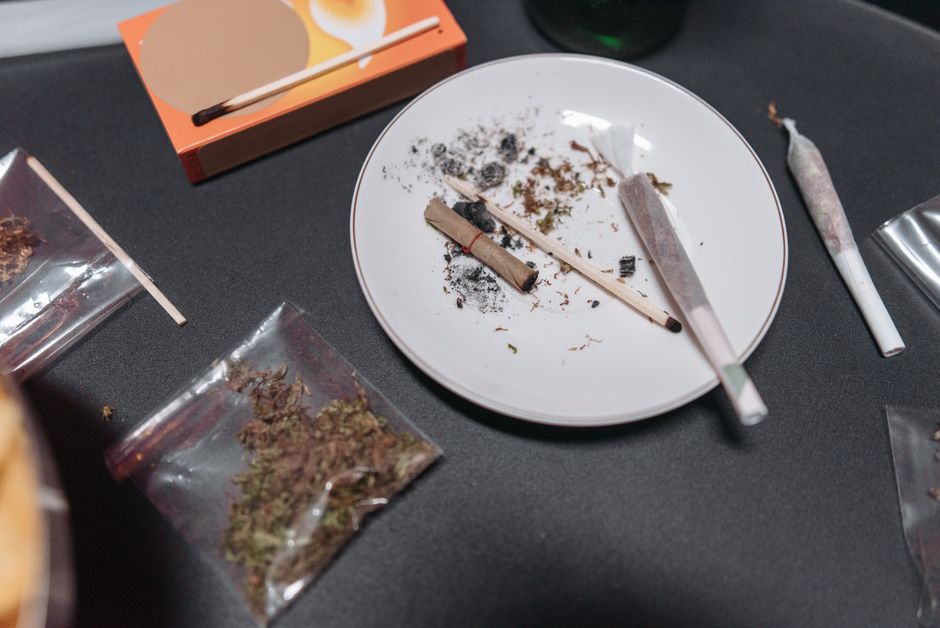
- Edibles are excluded: If you see a gummy or a chocolate bar, it is not legal under Georgia’s current framework. Smokeable flower is prohibited: The law authorizes specific forms of oil—tinctures, capsules, topicals, and oil for vaporization devices—not raw, smokable cannabis. It is not a "Dispensing" license: These are "Low THC Oil Dispensing" entities, and they are subject to strict oversight by the Georgia Access to Medical Cannabis Commission (GMCC).
The Math: Understanding Thresholds
One of my biggest pet peeves as a reporter is the confusion between potency percentages and total THC possession limits. I have double-checked the current enrolled bill language, and here is how the math breaks down for the patient.
1. Potency Cap
By statute, the oil itself is limited to 5% THC by weight. This is not a "super-strength" product. It is a strictly controlled formula meant to ensure consistency, not high-potency intoxication.
2. Possession Limit
The possession limit is not based on the percentage of THC in the bottle, but on the total volume. Under current law, a registered patient is limited to the possession of 20 fluid ounces of Low THC Oil. When you are looking at labels, do not mistake the 5% potency cap for the 20-ounce possession limit. They are two distinct metrics that exist to prevent bulk hoarding and diversion.
3. Milligrams (mg) vs. Percentage
The Commission and manufacturers track by total milligrams of THC per package. If a product is labeled as having "x" mg of THC, that is your hard cap. If you exceed the 20-fluid-ounce total volume, you are in violation of state law, regardless of the potency per ml.

Checklist: Are You Compliant?
If you are planning a visit to a licensed provider, use this checklist to ensure you aren't falling for "dispensary" myths. You can screenshot this list and keep it on your phone.
Compliance Item Status Is my DPH Registry Card active? Must be renewed annually. Is the product a form of oil? Capsules, tinctures, topicals, or vaporization oil only. Is the product an edible (gummy/baked good)? NOT LEGAL. Do not purchase. Is it smokable flower? NOT LEGAL. Do not purchase. Total possession volume? Must stay at or below 20 fluid ounces.Expanded Qualifying Conditions: The SB 220 Shift
The transition from the old "Low THC Oil" statutes to the current framework was largely driven by the expansion of qualifying conditions. For years, the list was short and rigid. SB 220 and subsequent legislative updates have acknowledged the clinical reality for patients suffering from more systemic conditions.
If you have been waiting for the law to catch up to your diagnosis, you should check the Georgia DPH Low THC Oil Registry for the most current list, as conditions are added through legislative action and periodic rulemaking. Notable inclusions now cover:
Intractable Pain: This is a complex diagnosis. Ensure your physician has documented this clearly in your medical records, as it is a frequent target for state audits. Lupus: A massive win for patients who previously had to seek relief through less-regulated, illicit channels. Severe Tourette’s Syndrome: Specifically identified in recent updates to the registry. Autism Spectrum Disorder: Subject to specific age and severity requirements per current statute.The Reporter’s Take: Why the Nuance Matters
I have sat through hundreds of hours of committee hearings. I have watched the lobbyists, the parents of sick children, and the law enforcement officials spar over every single line of these bills. The reason this framework is so "narrow" is that the legislature is terrified of the word "recreational."
Every time a consumer calls a facility a "dispensary," a lobbyist somewhere is writing a memo to a state senator about how the program is "slipping into recreational use." By using accurate language—by recognizing that this is a regulated narrow framework—you are actually helping to protect the program's longevity. We are playing a long game. The goal is to keep patients safe and registered, not to compete with the Wild West of out-of-state retail markets.
Final Advice for Caregivers
If you are a caregiver, your registration is just as vital as the patient’s. Ensure your registry card freedomforallamericans.org is updated and that you are not transporting more than the legal 20-fluid-ounce limit. Keep your packaging intact; the state requires the original labeling to prove the product was obtained from a licensed Georgia manufacturer. If you peel off a label or move the oil into an unlabeled container, you are creating a legal headache for yourself that no amount of explaining to a police officer will fix.
Stay informed. Check the Georgia DPH Low THC Oil Registry regularly for updates. And please, stop calling it a dispensary. In Georgia, words have legal weight, and knowing the difference between "medical cannabis" and "dispensary weed" might be the only thing keeping you on the right side of the law.
Sources:
- Georgia General Assembly: LegiScan and Enrolled Bill Archives (Reviewing SB 220 and subsequent amendments) Georgia Department of Public Health: Low THC Oil Registry Qualifying Conditions